

The lab,
anywhere.
We build automated biotools where no lab
can go — from remote field sites to
low Earth orbit.
We build automated biotools that operate anywhere — from remote field sites on Earth to space stations in low Earth orbit.
Read our story →Automated sample prep,
built for anywhere.
Our first system automates sample preparation for downstream genomic analysis. Innovations in biochemistry and device design let it run on an orbiting spacecraft, in the field, or on a remote bench, and return results in real time.

Automated
Sample in, data out.
No trained operator required.
Portable
Engineered for microgravity, the field, and unresourced communities.
Real-time results
Sequence and analyze on site —
no need to ship samples home.
One platform, many frontiers.

On orbit
Real-time R&D on the International Space Station and future commercial space stations.
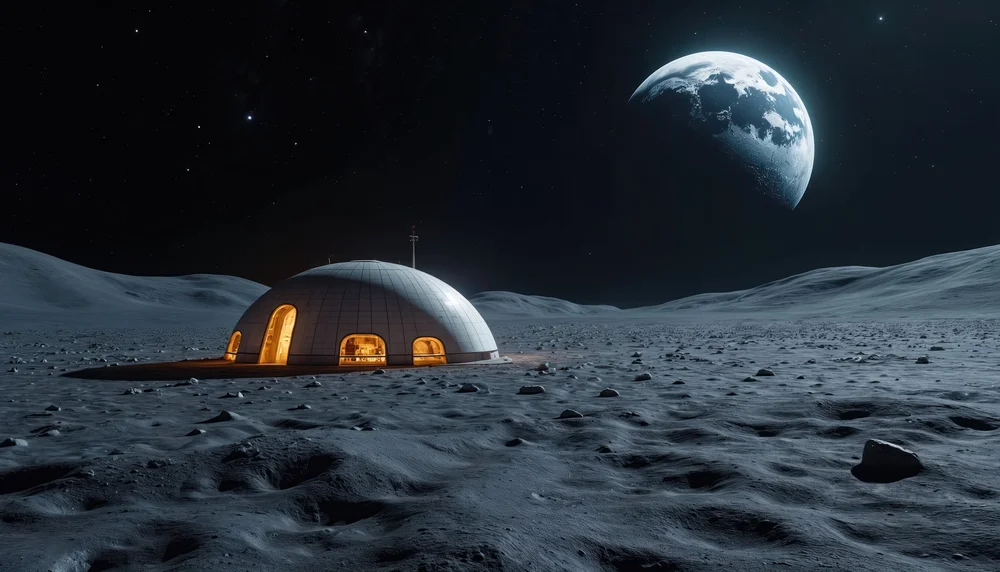
On the Moon
Self-sufficient genomics for lunar bases — advanced research that doesn’t depend on Earth resupply.

Defense
Far-forward diagnostics where field labs can't follow.
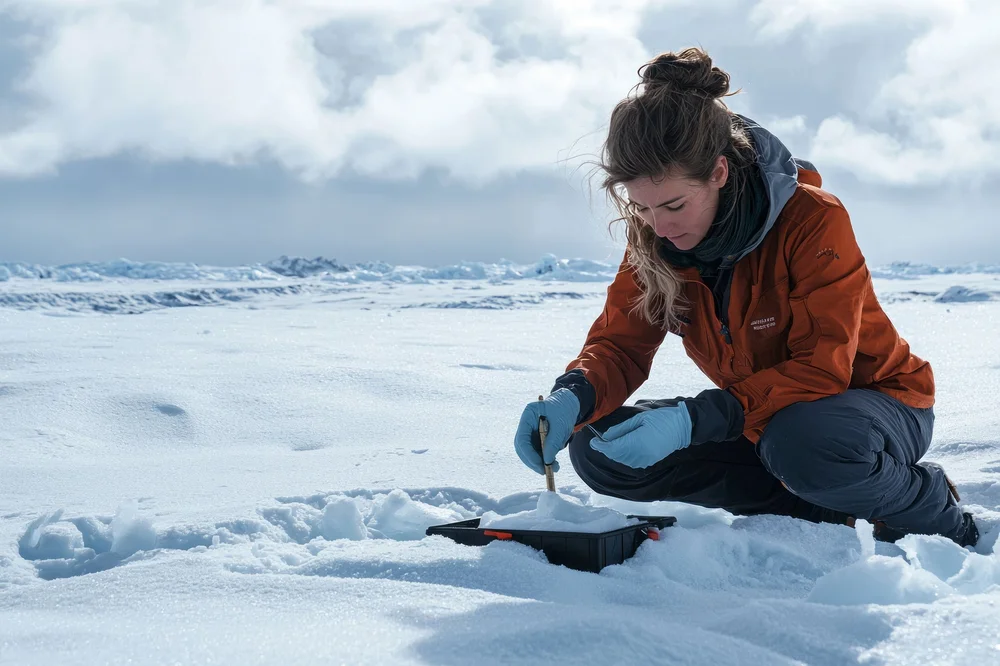
Extreme environments
Extremophile research from polar ice to the deep ocean and hot deserts.

In the field
Agricultural and environmental monitoring at the source.

In the lab
Automation that removes human error from routine tasks.
Meet the team
ΛNTΛ Biotech was founded by scientists and engineers driven by the need for an automated solution. Meet our team of founders, scientists, engineers, and advisors.
It takes a global village to bring ideas to life.











Trusted by NASA and the
National Science Foundation.
We're building alongside the institutions defining the future of science in space.






Your questions, answered.
What is "biology at the edge"?+
We have coined the phrase "biology at the edge" to define biological tools that enable immediate and on-demand functionality — like edge compute. Biology at the edge is a union of research and biotechnology at the extreme boundaries of operational environments and technological capabilities. Biology at the edge encompasses advancing scientific understanding in previously inaccessible research domains.
For ΛNTΛ, "the edge" has five interconnected meanings:
We are bringing biology to the frontier.
Why Space?+
Space is a unique environment. Decades of research has shown that the conditions of Space, especially weightlessness (commonly known as microgravity), alter gene expression. There is much to be explored and learned. But, the right tools are not available to do this in Space. Developing gravity-agnostic tools will open up the final frontier to a new era of research and discovery. Solving for Space also solves many problems for Earth.
What future-proofed lab tool are you building first?+
Engineering gravity-agnostic lab instruments where the same device can function both on Earth and in Space is a "white space problem". Our first "zero to one" technology aims to automate nucleic acid sample prep in Space.
Why does biology at the edge matter?+
- To allow Space scientists to iterate their research in real time on the ISS (or near-future commercial space stations) with in situ analytical tools.
- To allow future missions to the Moon or Mars to be less dependent on Earth and enable advanced research at long distances from Earth.
- To equip military personnel with diagnostics capabilities against pathogens and bioweapons at the far-forward edge.
- To allow researchers studying extremophiles in Antarctica or the deep ocean to collect and analyze samples at the Earth's edge.
- To enable farmers to monitor their crop and livestock health in real-time at the farm's edge.
- To help terrestrial scientists at the lab bench reduce errors and speed up research by automating routine protocols.
We are building the infrastructure for biology beyond boundaries.
Let’s talk.
Whether you’re a mission partner, an investor, or a scientist who wants to build the future — reach out to us.